Quick answerOur recommendation in brief
tado Wireless Smart Thermostat X is the strongest all-round starting point for an expandable new system, while Hive Thermostat Mini is the approachable mainstream UK choice. Drayton Wiser Multi-zone Kit 1 is best when room-by-room control is the priority from day one, Honeywell Home T6R provides dependable wireless scheduling, and Nest suits committed Google Home users after compatibility is confirmed. The boiler, hot-water arrangement and zoning plan should decide the purchase before design or app preference.
Our top picks at a glance
| Recommendation | Product | Best for | Lowest price | |
|---|
| Best all-round expandable system | tado° Wireless Smart Thermostat X | Households planning an expandable smart-heating system | Check current price | View product |
| Best mainstream UK choice | Hive Thermostat Mini | Buyers wanting simple remote control and established UK support | Check current price | View product |
| Best for practical room-by-room control | Drayton Wiser Multi-zone Kit 1 (1st generation) | Homes that need different temperatures in individual rooms | Check current price | View product |
| Best dependable wireless thermostat | Honeywell Home T6R Smart Thermostat | Buyers prioritising proven heating control over a large smart-home ecosystem | Check current price | View product |
| Best for Google Home | Google Nest Learning Thermostat (4th gen, North America only) | Google-centred smart homes that want learning features | Check current price | View product |
Prices shown may change after you leave MainBuyer.
Best all-round expandable systemtado° Wireless Smart Thermostat X
It combines modern app control with an upgrade route to room-by-room radiator management and supports common UK wireless boiler arrangements.
Best for: Households planning an expandable smart-heating system
Read review and retailer links Best mainstream UK choiceHive Thermostat Mini
Straightforward app scheduling, familiar installation options and compatibility with Hive radiator valves make it approachable for many conventional homes.
Best for: Buyers wanting simple remote control and established UK support
Read review and retailer links Best for practical room-by-room controlDrayton Wiser Multi-zone Kit 1 (1st generation)
The kit begins with radiator-level zoning rather than treating it as a later decorative extra, making it well suited to homes with uneven heating needs.
Best for: Homes that need different temperatures in individual rooms
Read review and retailer links Best dependable wireless thermostatHoneywell Home T6R Smart Thermostat
It focuses on conventional scheduling, geofencing and wireless placement from a long-established heating-controls brand.
Best for: Buyers prioritising proven heating control over a large smart-home ecosystem
Read review and retailer links Best for Google HomeGoogle Nest Learning Thermostat (4th gen, North America only)
Automatic schedule learning and polished Google Home integration suit buyers who value design and ecosystem convenience, subject to UK availability and compatibility.
Best for: Google-centred smart homes that want learning features
Read review and retailer links Compatibility comes before app features
UK heating systems vary widely. A combi boiler heats water on demand and often needs a single heating channel, while a system or regular boiler may use a hot-water cylinder and separate controls. Some homes have multiple heating zones, underfloor circuits, heat pumps or proprietary boiler communication. The thermostat kit must match the control requirement, not merely the boiler brand. A wireless room unit still needs a receiver connected correctly to the heating system.
OpenTherm or another modulating connection can allow a compatible boiler to vary its output rather than simply switching fully on and off, but both the boiler and control must support the same method and be configured correctly. Relay compatibility alone does not guarantee every advanced feature. Before purchasing, use the manufacturer's compatibility information and provide the exact boiler model, current programmer arrangement and whether hot water is separately timed. Where wiring is uncertain, professional installation is the sensible route.
A single thermostat is not the same as room-by-room control
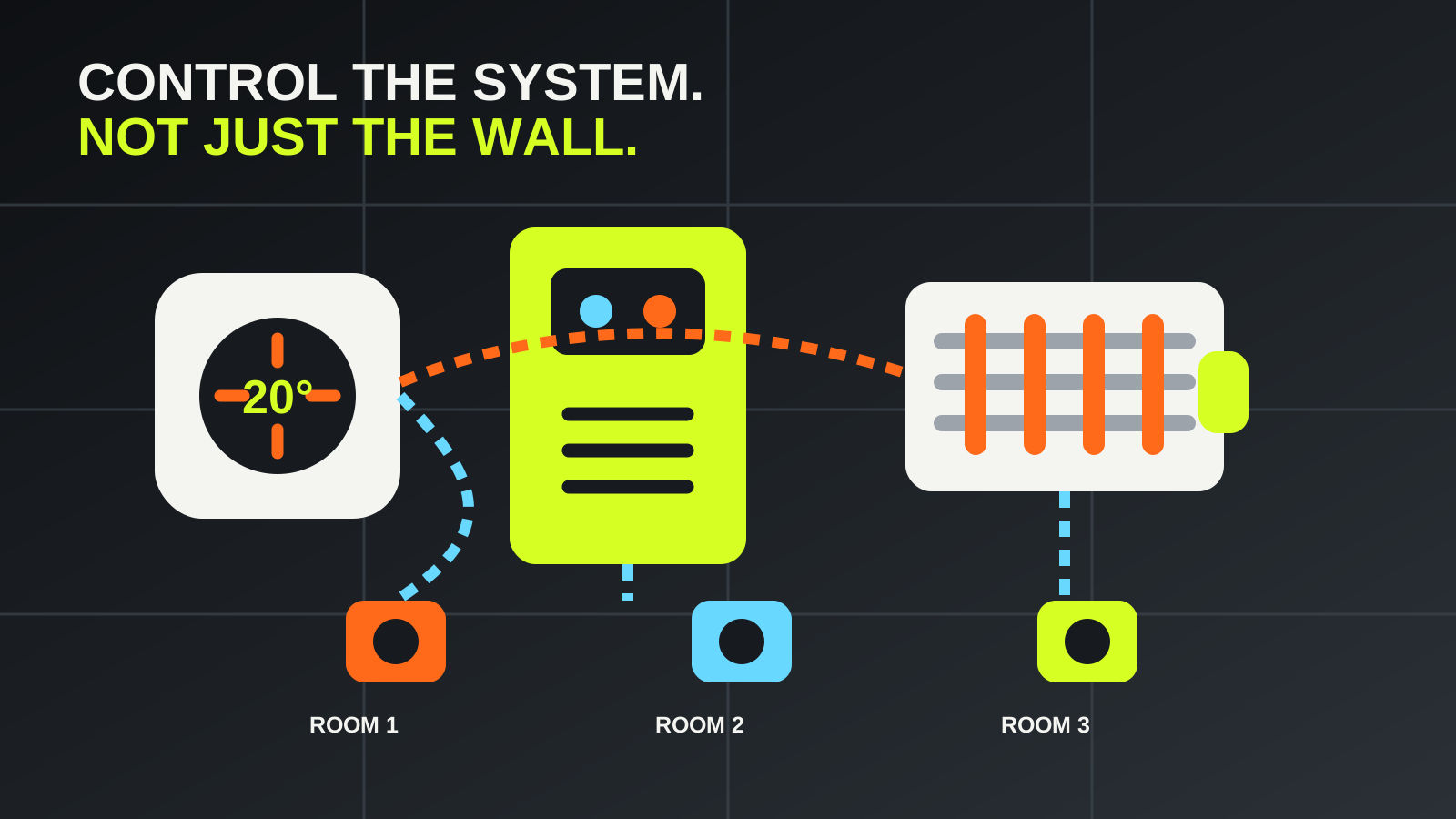
A central thermostat measures one location. If that hallway warms quickly while bedrooms remain cold, the boiler may stop before the whole home feels comfortable. Traditional thermostatic radiator valves can limit individual rooms, while smart radiator thermostats add schedules and remote control. Systems such as tado and Wiser can coordinate the room demand with the boiler, although the exact behaviour depends on setup and product generation.
Adding a smart head to every radiator is expensive and not always necessary. Start with rooms that have different usage patterns, such as a home office, nursery or rarely used spare room. The radiator in the main thermostat area may need special treatment so the central sensor and valve do not conflict. Bathrooms, towel rails and rooms with underfloor heating can require different controls. Room zoning improves flexibility, but it does not correct an undersized radiator, poor insulation or an unbalanced heating system.
Scheduling and geofencing should support a simple heating plan
The biggest practical improvement often comes from replacing an old programmer with a schedule that reflects when the home is occupied. Setbacks can reduce unnecessary heating while protecting comfort and the property. Remote access is useful when plans change, and geofencing can prompt or automate adjustments as people leave and return. In a household with several phones, permissions and conflicting locations need careful setup so the heating does not switch off when one person leaves while another remains at home.
Learning systems attempt to infer routines, but automatic changes should remain understandable and reversible. Weather compensation, optimum start and open-window detection can be useful, yet each feature adds decisions and sometimes false triggers. Begin with a clear manual schedule, observe how long the home takes to warm and then enable automation deliberately. A smart thermostat should reduce interaction, not create a daily argument with notifications and unexplained overrides.
Subscriptions, cloud dependence and product generations matter
Core heating control should remain usable without an optional premium plan, but some brands charge for enhanced automation, reports or convenience services. Check which features are free today and whether the thermostat can still be operated locally if broadband or the provider's service is unavailable. Cloud outages should not leave the home without basic heat, although remote app control and certain automations may stop temporarily.
Product generations are particularly important. tado X uses a newer platform and accessories should not be assumed to mix freely with earlier tado V3+ or V3 systems. Hive, Wiser and Nest also have generation-specific hubs, receivers and app requirements. When extending a system, confirm the exact protocol and compatibility rather than buying a similarly named radiator valve. Replacement availability matters because heating controls are expected to remain in service much longer than a phone.
Installation quality affects comfort and efficiency
A thermostat should sense a representative room temperature, away from direct sun, draughts, radiators and heat-producing electronics. A wireless unit provides more freedom, but it still needs a stable radio path to its receiver or hub. Smart radiator heads require correct valve bodies and adapters, and the valve pin must move freely. Batteries should be accessible and replaced before winter rather than after a room stops responding.
Commissioning is more than making the boiler fire. Check hot-water timing where relevant, frost protection, maximum flow temperature, boiler cycling and what happens if the internet fails. Label old wiring before changes and retain manuals and installer records. Gas work must be completed by an appropriately qualified engineer, while electrical controls should be installed safely. A DIY-compatible marketing message does not override the condition of the existing wiring or the user's competence.
How the shortlisted systems differ
tado Wireless Smart Thermostat X is the strongest all-round recommendation for a new expandable system, especially when room-by-room control may be added. Hive Thermostat Mini is the simpler mainstream UK choice with a familiar app and installer ecosystem. Drayton Wiser Multi-zone Kit 1 is the most direct route to practical radiator zoning because the starter package is built around multiple controlled rooms rather than one central display.
Honeywell Home T6R suits buyers who want dependable wireless scheduling and geofencing without committing deeply to a broader branded smart home. Nest is most attractive to a Google Home household that values automatic learning and premium design, but the exact fourth-generation UK availability, boiler support and installation route must be confirmed. None should be selected solely on claimed percentage savings; the existing schedule, property fabric, household behaviour and heating system determine the result.
What to consider before buying
- Identify whether the home has a combi boiler, hot-water cylinder, multiple zones, heat pump or underfloor heating.
- Confirm relay or modulation compatibility using the exact boiler model.
- Decide whether one central temperature is enough or room-by-room control is required.
- Check which automation and reporting features need a subscription.
- Keep product generations and accessory protocols consistent.
- Position sensors away from radiators, sunlight and draughts.
- Use a competent installer where wiring, gas appliances or system design are uncertain.
Frequently asked questions
Will a smart thermostat save money?
It can reduce waste by improving schedules, remote adjustments and room control, but no fixed saving is guaranteed. Results depend on the previous controls, insulation, heating pattern, energy price and how the household uses the new system.
Can I install a smart thermostat myself?
Some kits are marketed for DIY installation, but boiler controls can involve mains electricity, low-voltage communication and system-specific wiring. Professional installation is advisable whenever the existing arrangement or competence is uncertain, and gas work requires an appropriately qualified engineer.
Do I need smart radiator valves in every room?
No. A central thermostat can provide useful scheduling on its own. Add smart radiator controls where rooms need different temperatures or times, and confirm how they communicate demand to the boiler.
What happens if the internet goes down?
Basic local heating control should normally continue, but app access, geofencing, reports and cloud automation may be unavailable. Check the manufacturer's current offline behaviour and retain a working physical control method.
Is OpenTherm better than simple on-off control?
A compatible modulating connection can let the boiler adjust output more smoothly, potentially improving comfort and operation. Both the boiler and thermostat must support and be configured for the same protocol; otherwise relay control may be the appropriate option.
Evidence and methodologyHow this guide was prepared
This guide uses official specifications, manufacturer guidance, retailer model information and MainBuyer editorial judgement. It explains trade-offs rather than claiming one product is right for everyone, and it does not describe research-based assessments as hands-on tests.
See how we review, our editorial policy and corrections policy.
Last editorial review: 2026-07-14
SourcesResearch references