Torches, head torches and lanterns for a power cut
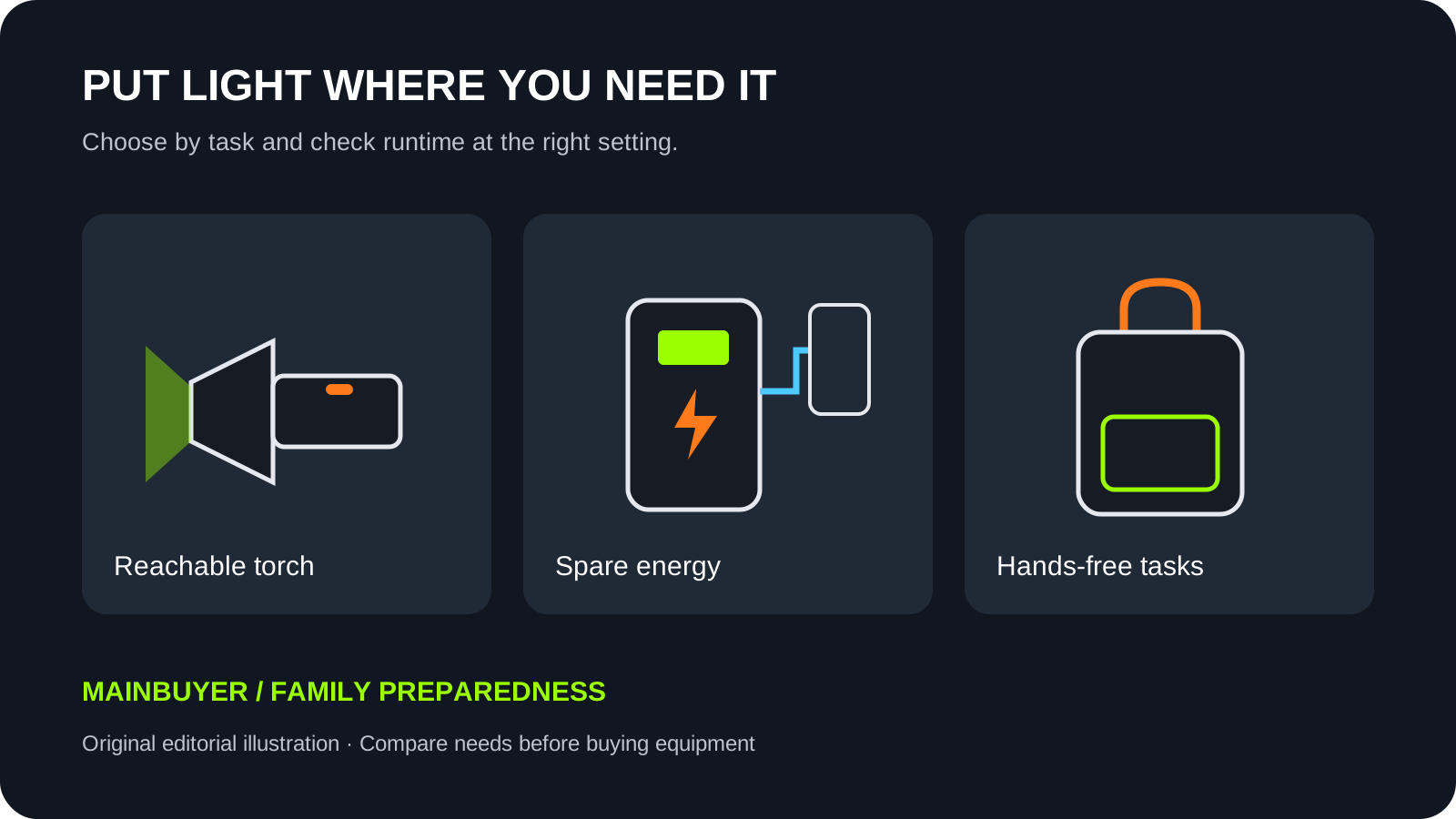
Choose light by the task: a hand torch for finding your way, a head torch for working with both hands, or a lantern for a shared space.
By MainBuyer Editorial Team · Published 2026-10-24 · Reviewed 2026-10-24
Our recommendation in brief
Choose light by the task: a hand torch for finding your way, a head torch for working with both hands, or a lantern for a shared space.
Buy for where the light is needed
Walk through the route from bedroom to stairs, bathroom and the supply cupboard. Think about whether you can reach a light before moving through darkness. Keep controls simple enough for everyone who will use them.
A narrow beam is useful for directing light, while a lantern spreads illumination around a table. A head torch frees your hands. One expensive torch may be less useful for a family than modest lights in several accessible places.
Read brightness and runtime together
Check the runtime for the brightness setting you actually intend to use. A headline maximum output and the longest stated runtime often refer to different modes. Our Ledlenser P7 Core evaluation gives a concrete example.
Manufacturer runtime figures are not MainBuyer test results and may not describe constant brightness throughout. Use lower settings when adequate and keep the correct spare batteries ready.
Battery or rechargeable?
Replaceable batteries let you restore light without a working charger. Rechargeable lights can reduce routine battery purchases, but you need a charged source during an outage. Match the choice to the supplies you will maintain.
Check battery type before buying a multipack. Keep loose cells out of children’s reach and follow the device manual. The government checklist favours torches over candles.
What to consider before buying
- Check runtime at the selected brightness.
- Place lights before an outage.
- Do not assume splash resistance means submersible.
How this guide was prepared
This guide uses official specifications, manufacturer guidance, retailer model information and MainBuyer editorial judgement. It explains trade-offs rather than claiming one product is right for everyone, and it does not describe research-based assessments as hands-on tests.
See how we review, our editorial policy and corrections policy.
Last editorial review: 2026-10-24